
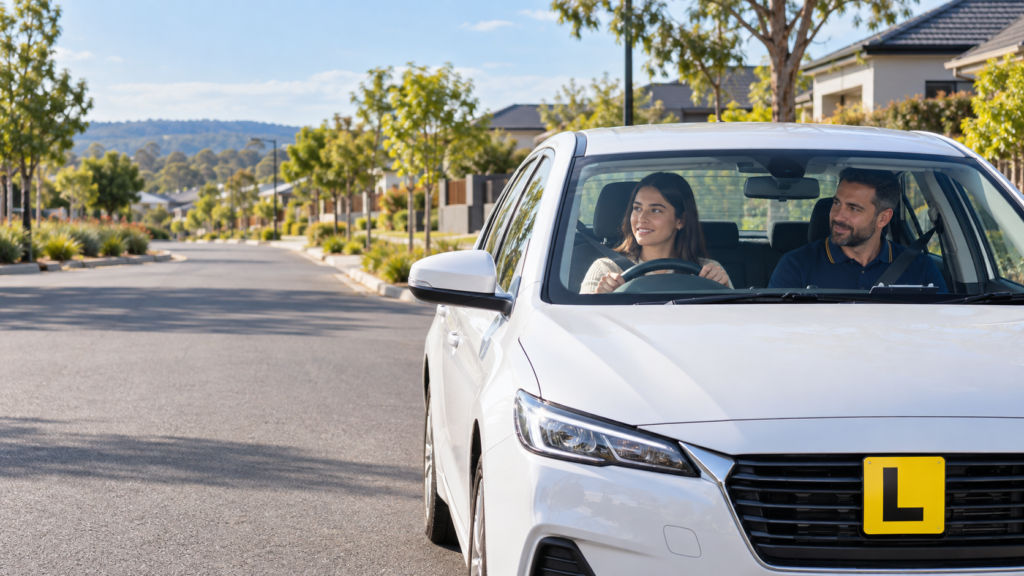
Learning to drive is not simply about passing a test. It is about developing the observation, judgement and vehicle-control skills needed to make safe decisions on real roads.
If you are searching for driving lessons in Doreen, learning locally can help you build confidence in the road conditions you are likely to experience regularly. Doreen and the surrounding northern suburbs include residential streets, busier intersections, changing speed zones and major connecting roads. This variety allows lessons to progress gradually as your skills improve.
At Mehta Driving School, lessons are designed around the learner’s current experience and goals. Whether you are getting behind the wheel for the first time, preparing for your driving test or returning to driving after a break, patient one-to-one instruction can help you move forward with greater confidence.
Why Learn to Drive in Doreen?
Doreen offers a useful mix of driving environments. A new learner may begin on quieter residential streets, where there is more time to become familiar with steering, braking, mirrors and basic road positioning. As confidence develops, lessons can move towards more demanding situations, such as roundabouts, multilane roads and busier intersections.
Local learners may encounter roads such as Bridge Inn Road and Yan Yean Road, together with residential streets in and around Doreen. These conditions can provide opportunities to practise:
-
- changing speed limits
-
- safe gap selection
-
- lane positioning and lane changes
-
- roundabouts and traffic lights
-
- scanning for pedestrians, cyclists and other road users
-
- responding to congestion and changing traffic conditions
-
- planning ahead before turns and intersections
Road conditions can change because of traffic, weather and construction. The Yan Yean Road Upgrade is currently continuing towards Bridge Inn Road in Doreen, so learners should always follow current signs, temporary speed limits and their instructor’s directions rather than trying to memorise a fixed route.
What Happens During Your First Driving Lesson?
Your first lesson should be based on what you already know. A complete beginner will need a different starting point from someone who has already completed many supervised hours.
Before driving, your instructor may discuss your previous experience, confidence level and learning goals. You may then review important controls and safety checks, including:
-
- adjusting the seat and head restraint
-
- positioning the mirrors
-
- fastening the seat belt correctly
-
- understanding the pedals and main controls
-
- checking the surrounding area before moving
-
- using indicators and mirrors correctly
If you are a new learner, the early part of the lesson may take place in a quieter location. The focus is normally on smooth starts and stops, basic steering, safe positioning and developing a consistent observation routine.
If you already have driving experience, the instructor may first observe your current habits. This helps identify what you are doing well and which skills need more practice. Your lesson can then be structured around your priorities instead of following a one-size-fits-all plan.
Important Skills to Develop During Driving Lessons
Good driving lessons should do more than teach you how to operate the vehicle. They should help you recognise risks early and make safe, independent decisions.
Observation and hazard awareness
Learners need to check mirrors regularly, scan intersections and notice potential hazards before they become immediate problems. This includes watching for pedestrians, cyclists, parked vehicles, changing traffic lights and vehicles entering from side streets.
Speed management
Safe speed is not only about staying below the posted limit. You must also adjust your speed for traffic, visibility, roadworks, weather and the space available around your vehicle.
Road positioning
Correct positioning helps create space and makes your intentions clearer to other road users. Lessons may include positioning on residential streets, approaching intersections, negotiating roundabouts and driving on roads with multiple lanes.
Gap selection
Turning, entering a roundabout or joining traffic requires judgement. Your instructor can help you assess the speed and distance of approaching vehicles without rushing into an unsafe gap.
Vehicle control
Smooth acceleration, progressive braking and controlled steering make driving safer and more comfortable. These skills also give you more time to observe and respond to changing conditions.
Independent decision-making
The long-term goal is to drive safely without depending on constant instructions. As you progress, your instructor should give you more opportunities to plan, make decisions and correct mistakes safely.
A Sensible Learning Progression
Trying to handle busy roads before mastering basic control can make lessons stressful. A gradual approach is usually more productive.
Stage 1: Basic control
Start with seating position, controls, steering, moving off, stopping, mirror checks and simple turns.
Stage 2: Quiet local streets
Practise road positioning, speed control, intersections, parked vehicles and identifying common hazards.
Stage 3: More varied traffic
Introduce larger roundabouts, traffic lights, busier roads, changing speed zones and lane selection when the learner is ready.
Stage 4: Complex situations
Develop safe lane changes, merging, higher-speed driving, parking manoeuvres and independent navigation.
Stage 5: Test preparation and independent driving
Refine observation, judgement and consistency. A mock assessment can help reveal habits that still need improvement, but it should not be presented as a guaranteed prediction of the test result.
The time spent in each stage will vary. Progress should be based on consistent skill and safety—not on rushing through a fixed number of lessons.
How Many Driving Lessons Will You Need?
There is no single answer. The number of professional lessons required depends on factors such as:
-
- your previous driving experience
-
- how frequently you practise between lessons
-
- your confidence and ability to manage pressure
-
- the variety of road conditions you have experienced
-
- the consistency of your observation and decision-making
-
- whether you are learning automatic or manual driving
-
- how close you are to being ready for an independent assessment
A learner who practises regularly with a suitable supervising driver may progress differently from someone who can only drive during professional lessons. Instead of choosing a number in advance, ask your instructor for honest feedback after each stage.
Victorian learners under 21 generally need to complete and log at least 120 hours of supervised driving, including at least 20 hours at night, and hold their learner permit continuously for at least 12 months before sitting the driving test. Always check the latest requirements on the VicRoads website because eligibility rules and exceptions may change.
Preparing for Your Victorian Driving Test
Test preparation should focus on safe driving behaviours rather than memorising a supposed test route. Roadworks, traffic and test directions can change. More importantly, learners need to show that they can respond safely wherever they are directed.
Preparation may include:
-
- applying mirror and head-check routines consistently
-
- choosing safe gaps without unnecessary hesitation
-
- maintaining appropriate speed and following distance
-
- responding correctly to signs, markings and traffic lights
-
- demonstrating safe lane changes and turns
-
- performing required low-speed manoeuvres with control
-
- identifying hazards and acting early
-
- driving independently while following directions
VicRoads provides the Road to Solo Driving handbook and learner resources to help drivers understand Victorian road rules and prepare for safe solo driving. Use these official resources alongside practical experience and professional feedback.
How to Choose a Driving Instructor in Doreen
When comparing a driving instructor in Doreen, do not base the decision only on the cheapest advertised price. Consider whether the instructor:
-
- explains mistakes calmly and clearly
-
- adjusts lessons to your experience and confidence
-
- teaches safe habits rather than shortcuts
-
- provides specific feedback after each lesson
-
- helps you understand why a decision is safe or unsafe
-
- arrives with a properly maintained training vehicle
-
- offers lesson times that suit your schedule
-
- clearly explains pricing, duration and cancellation conditions
You should feel supported, but you should also receive honest feedback. A good instructor will not promise that you will pass. They will help you understand what needs improvement and what safe, consistent driving looks like.
Professional Lessons and Private Practice Work Best Together
Professional instruction and supervised practice serve different purposes. An instructor can introduce techniques, identify risky habits and provide structured feedback. Practice with a suitable supervising driver gives you more time to repeat those skills in different conditions.
After each professional lesson, ask which two or three skills you should practise before the next session. For example, your practice goal might be smoother braking, earlier mirror checks or safer speed adjustment near intersections. Focused practice is usually more useful than driving without a clear objective.
Where possible, build experience across different times and conditions, including daylight, night driving, light rain and moderate traffic—but only when the learner and supervisor can do so safely.
Frequently Asked Questions
Do you provide driving lessons in Doreen?
Mehta Driving School serves Doreen and selected northern suburbs of Melbourne. Lesson availability, pickup arrangements and suitable times should be confirmed when booking.
Can a complete beginner book a lesson?
Yes. Lessons can begin with vehicle controls, safety checks and basic driving skills in an appropriate environment before progressing to busier roads.
Can I book lessons if I already have driving experience?
Yes. Lessons can focus on confidence, local road conditions, parking, specific skills or driving-test preparation, depending on your needs.
Do you offer driving-test preparation?
Mehta Driving School offers test-preparation options. Preparation focuses on safe driving behaviours, observation, judgement and consistency rather than promising a pass or teaching a fixed test route.
Is a female driving instructor available?
The website states that a female instructor may be available. Ask about current availability when booking because schedules can change.
Do you provide pickup and drop-off in Doreen?
Ask when booking and provide your exact Doreen location. Availability may depend on the lesson time, instructor schedule and service coverage.
What should I bring to my lesson?
Bring your valid learner permit and wear suitable footwear. If you use glasses or contact lenses for driving, bring them. Confirm any other requirements when making the booking.
Book Driving Lessons in Doreen
Searching for driving lessons near me is only the first step. The right lesson should help you become calmer, more observant and more capable of making safe decisions independently.
Mehta Driving School provides patient, one-to-one driving lessons for learners in Doreen and surrounding northern suburbs. Whether you are starting from the beginning, improving particular skills or preparing for your driving test, your lessons can be planned around your current ability and goals.
Ready to begin? Book a lesson online or contact Mehta Driving School to ask about current availability in Doreen.